
Indian Board Games Are More Than Games: What They Tell Us About How India Lived, Learned and Socialised
Share
When we search for traditional Indian board games, names such as Pachisi, Chowka Bara, Chaturanga, Pallanguzhi and Aadu Huli often appear. But these games are interesting for a reason beyond their age. They give us glimpses into how people in India gathered, competed, calculated, negotiated and spent time together.
Games did not always come in boxes
Many traditional games required surprisingly little. A board could be drawn on the floor, marked on cloth or created using pits, lines and squares. Cowrie shells, seeds, stones and simple wooden pieces could become gaming material.
This simplicity made games easy to carry across homes, villages and regions. It also explains why the same family of games can appear under several names and slightly different rules.
Explore a wider collection of Indian board games.
Strategy existed long before modern board gaming
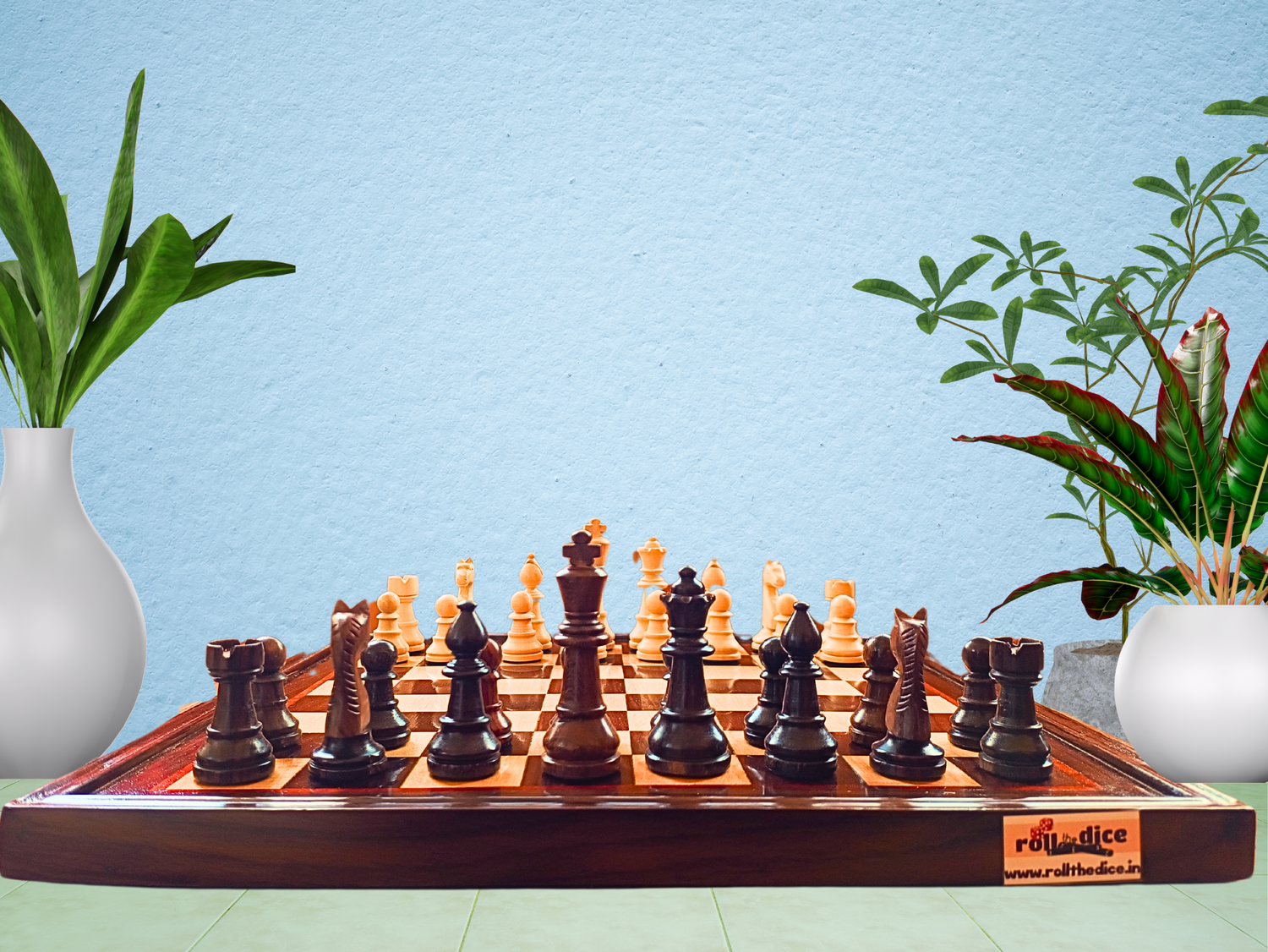
India has a long history of strategic play. Chaturanga, generally associated with the development of chess, represented different divisions of an army.
Other games explored completely different ideas.
Aadu Huli, or Tigers and Goats, uses unequal forces. One player has powerful predators; the other relies on numbers and restriction.
Aliguli Mane, belonging to the wider mancala family, revolves around counting, distribution and anticipating future positions.
Chowka Bara and Pachisi-type games combine movement, probability, tactical decisions and interaction between players.
You can explore step-by-step rules for traditional board games.
They also reveal India's regional diversity
Traditional Indian games rarely have a single neat identity. Pallanguzhi, Aliguli Mane, Channe Mane and Vamana Guntalu are related traditions found under different regional names. Similarly, cross-and-circle games appear in several forms across India.
That makes traditional games a kind of living cultural map. Language changes. Boards change. Rules change. But the idea of gathering around a game survives.
Why do these games matter today?
Because their biggest strength may be surprisingly modern: they create face-to-face play.
At a time when entertainment increasingly happens individually on screens, traditional board games provide strategy, conversation, competition and intergenerational interaction around the same table.
Perhaps that is why Indian board games should not be seen merely as objects from the past.
They are part of a continuing culture of play.
SEO keywords: , traditional Indian board games, ancient Indian games, games of India, Indian strategy games, traditional games for families, Pachisi, Chowka Bara, Aadu Huli, , Aliguli Mane, .